Importing Whole Cumin Seeds into Vietnam: Rules & Quality Requirements
Vietnam is an emerging market for spices and food ingredients, making it a potential destination for Indian whole cumin seeds. However, exporters must meet Vietnam’s food-safety, customs, labelling and quality requirements.
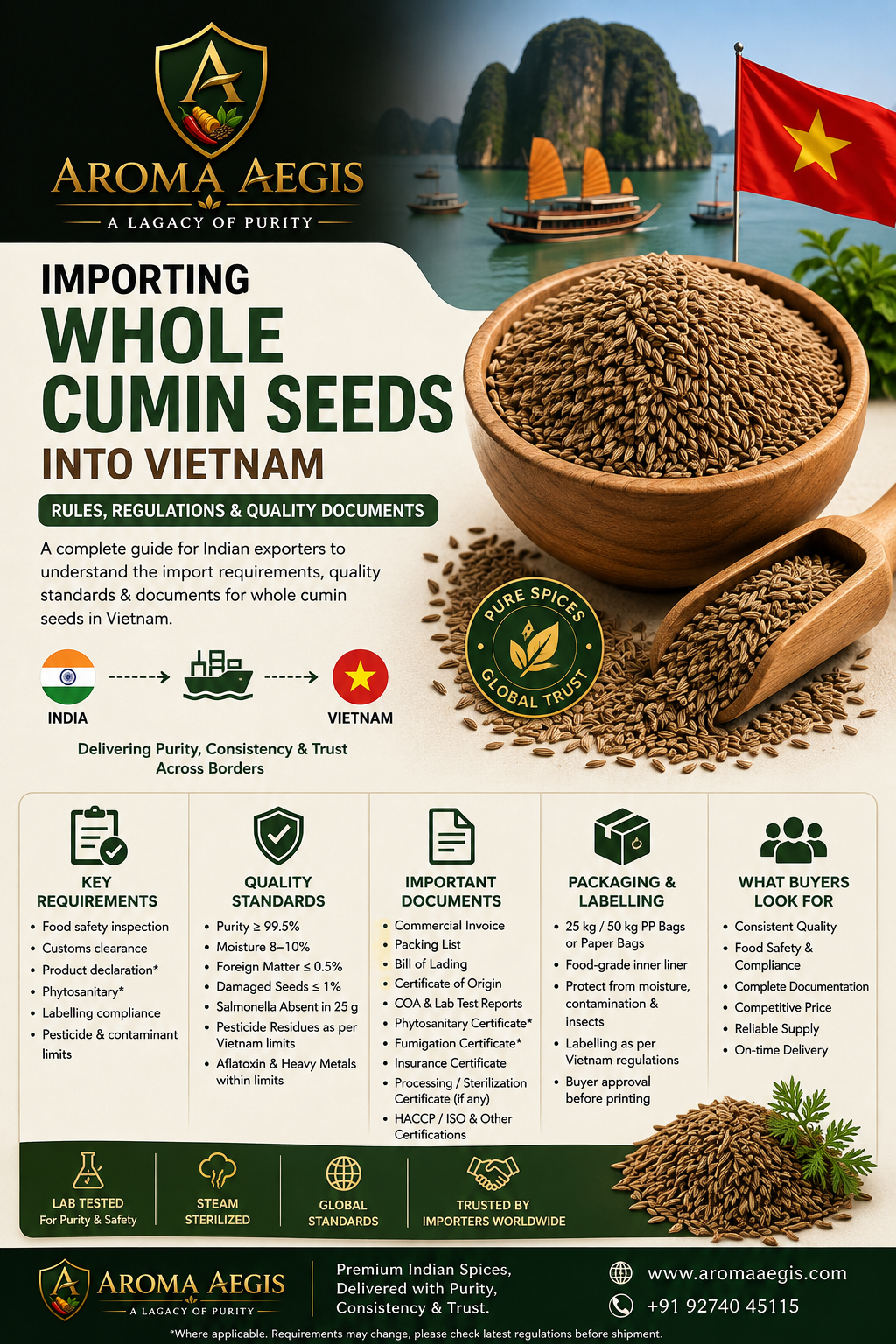
Key Requirements for Cumin Import
Vietnamese importers should verify the applicable requirements for:
- Food-safety inspection
- Customs clearance
- Product declaration, where applicable
- Vietnamese labelling requirements
- Plant-quarantine/phytosanitary requirements
- Applicable pesticide and contaminant limits
Vietnam’s food-safety framework includes the Law on Food Safety and Decree 15/2018/ND-CP.
Recommended Cumin Quality Specification
For premium B2B supply, exporters can offer specifications such as:
- Purity: ≥99.5%
- Foreign Matter: ≤0.5%
- Moisture: 8–10%, as agreed
- Damaged Seeds: ≤1%
- Salmonella: Absent in 25 g
- Pesticide Residues: Within applicable Vietnamese limits
- Aflatoxin & Heavy Metals: Within applicable limits
Final specifications should always be agreed with the Vietnamese buyer.
Important Export Documents
A typical shipment may require:
- Commercial Invoice
- Packing List
- Bill of Lading
- Certificate of Origin
- Certificate of Analysis (COA)
- Pesticide Residue Report
- Microbiological Test Report
- Phytosanitary Certificate, where applicable
- Fumigation Certificate, where applicable
- Insurance Certificate for CIF shipments
- Processing/sterilization certificate, if applicable
- HACCP/ISO and other facility certifications, when requested by the buyer
What Vietnamese Buyers Look For
Professional buyers generally evaluate cumin on:
Quality + Food Safety + Price + Consistency + Documentation
They may specifically request pesticide testing, microbiological reports, heavy-metal testing, aflatoxin results and batch-specific COAs.
Best Practice for Indian Exporters
Before shipping your first order:
Sample approval → Specification approval → Laboratory testing → Documentation → Buyer confirmation → Shipment
Do not rely only on a competitive price. A complete and transparent quality-documentation package can significantly improve buyer confidence.
Final Note
Vietnamese regulations and import requirements can change. The Vietnamese importer or customs/food-safety representative should confirm the latest requirements for the exact HS classification and product before shipment.